
One wall.
Four time frames.
A Board is a surface without a date: wipe-clean, reusable again and again, always showing where things stand. There are four of them – for the week, the quarter, the flow of tasks and for everything that has already been. Many of them hang on the very same rail.
A surface that never expires.
A calendar ends on 31 December. A board doesn't. It has no date, just a structure: the week, the quarter, your goals, the Kanban grid. Whatever is written on it gets wiped once it's done – and on Monday the next thing is already there.
That's why a board hangs where the decisions happen: beside your desk, on the wardrobe wall, on the fridge door. You write on it with a non-permanent marker pen, and mark it up with labels and reusable stickers.
And because not everything is about planning ahead, the Chronicle belongs here too: same wall, but looking back – one year or a whole decade.
What they all have in common
- Hang it, don't stick it – the metal weekview hanging rail carries them all
- Wipe-clean versions for everything that is still changing
- Pre-punched versions, a perfect fit for the hanging rail
- Labels, stickers and planning headers for marking things up
- Made in Germany
Four ideas that hold true on the wall too
They are the reason weekview plans differently from an ordinary calendar – and they open every planner as an introduction.
Recognise what matters
Life goals become yearly, quarterly and monthly goals – and out of those come the concrete weekly priorities A, B and C.
Live in the rhythm of the week
The week is the natural beat. Six days of work, one day of rest: close the old week, begin the new one on purpose.
Strengthen the inner person
What we do on the outside follows what happens inside. That is why every week carries a quote that invites you to think.
Keep life in view
A quarter of an hour of planning saves days of work. Thoughts get a fixed place – and they are found again.
How far ahead do you want to look?
Every board hangs on the same wall, many of them on the same rail. What differs is the span of time they show – from a single week to twenty years.
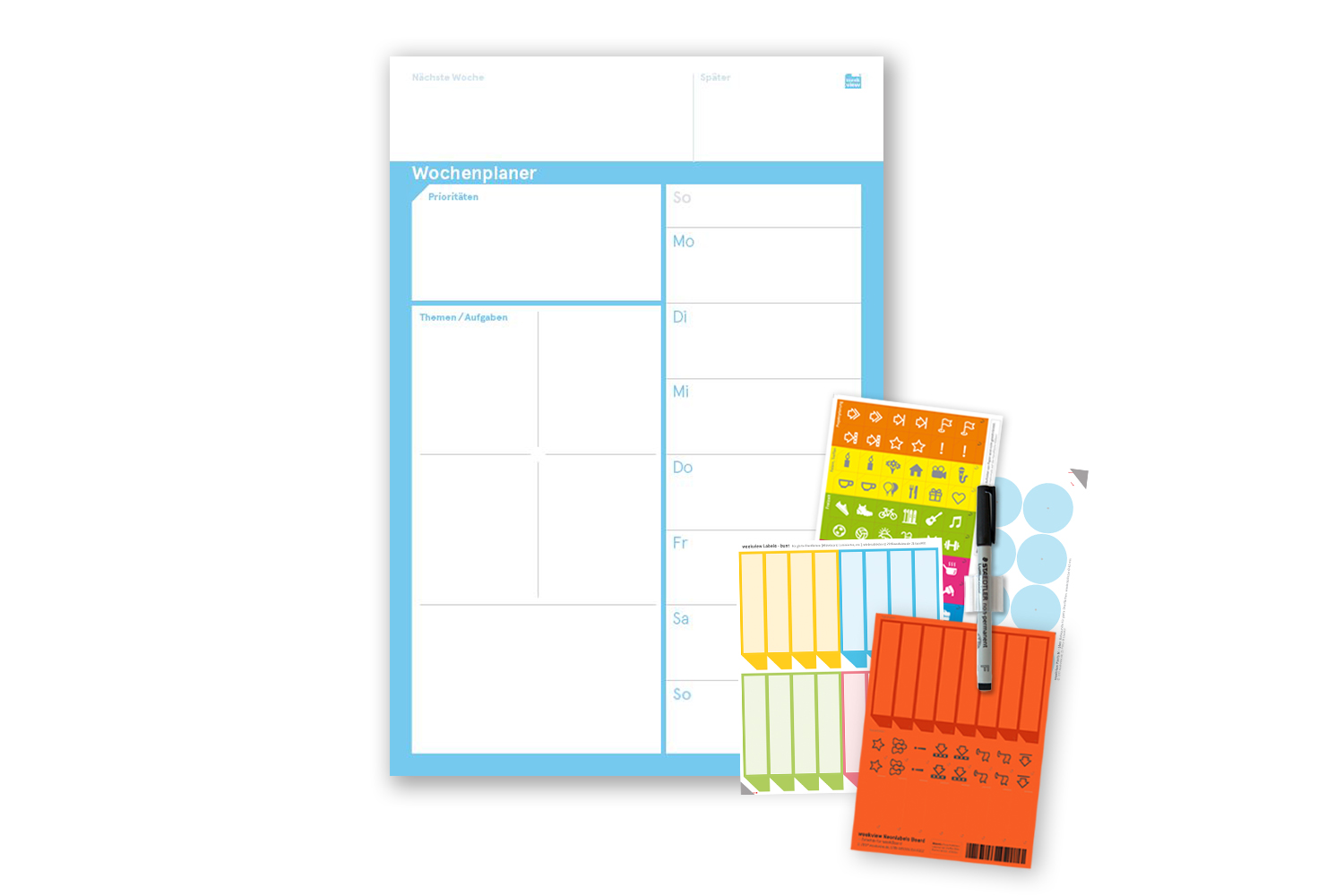
weekBoard
Priority field plus a daily section running Sunday to Sunday. In A2h portrait and A2 landscape.
14.90 €To the week →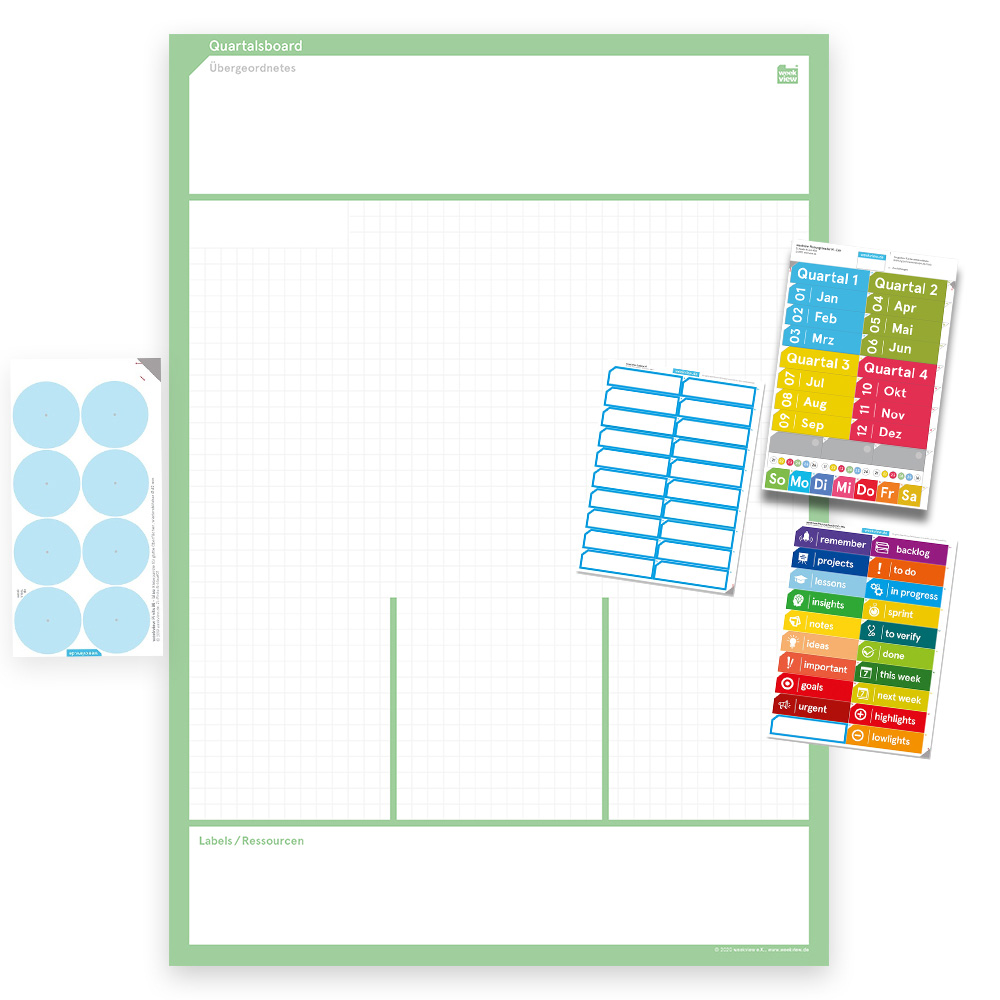
QuartalsBoard
Set your quarterly goals and keep them in plain sight – portrait by month, landscape by week.
14.95 €To the quarter →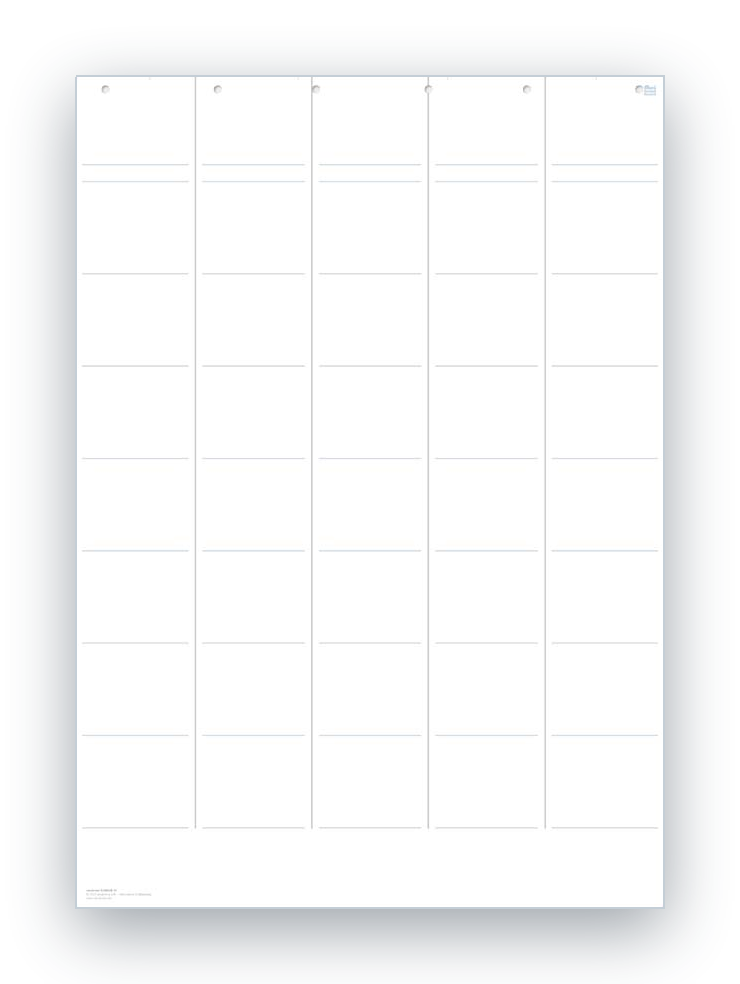
Kanban & Dotted
Two large surfaces in A1 portrait: columns for the flow of tasks, a dot grid for everything without a fixed shape.
from 9.95 €To the boards →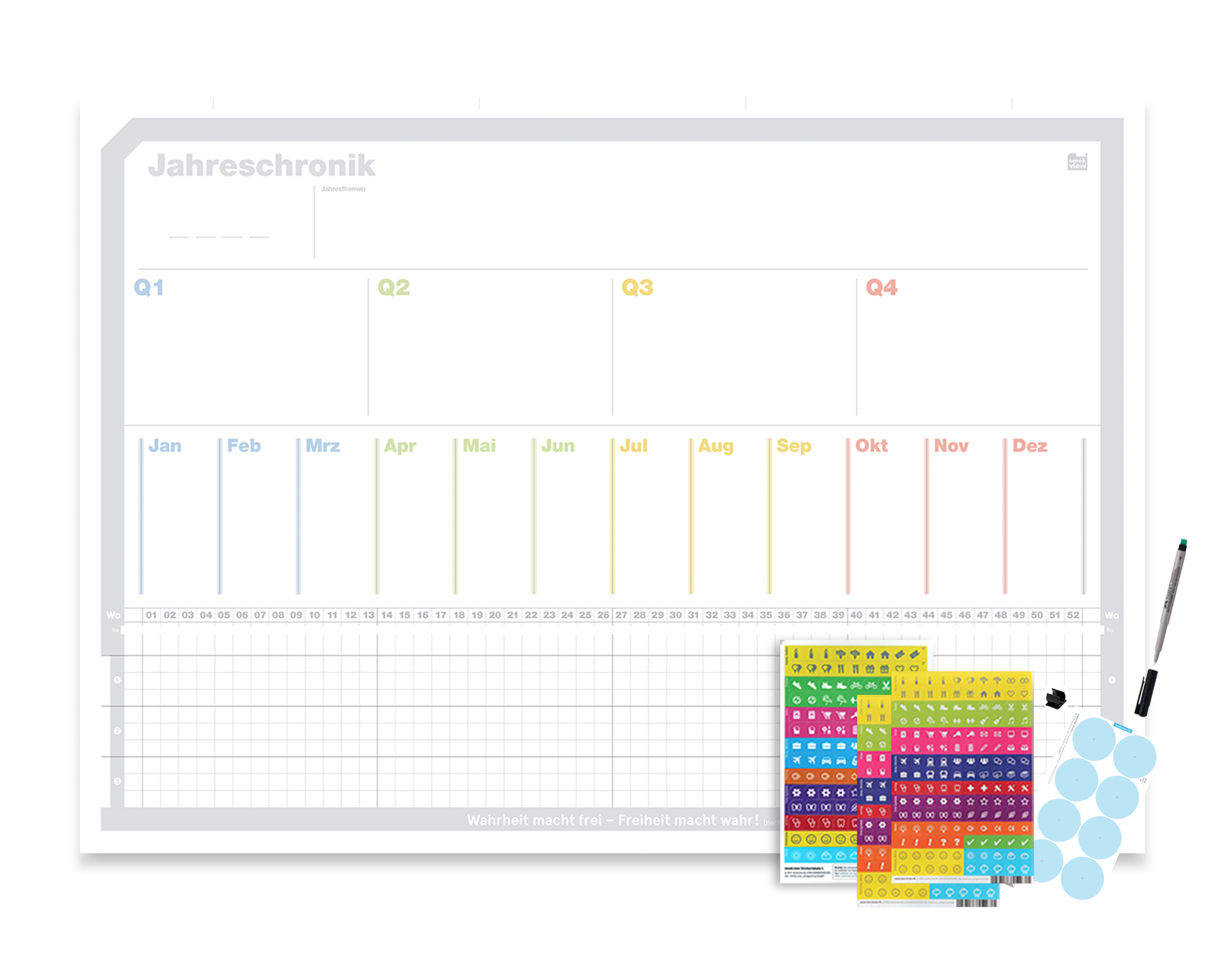
Chronicle
Not for planning but for keeping the record: one year in quarters and weeks – or a whole decade.
from 7.90 €To the Chronicle →Not all tasks are equally important.
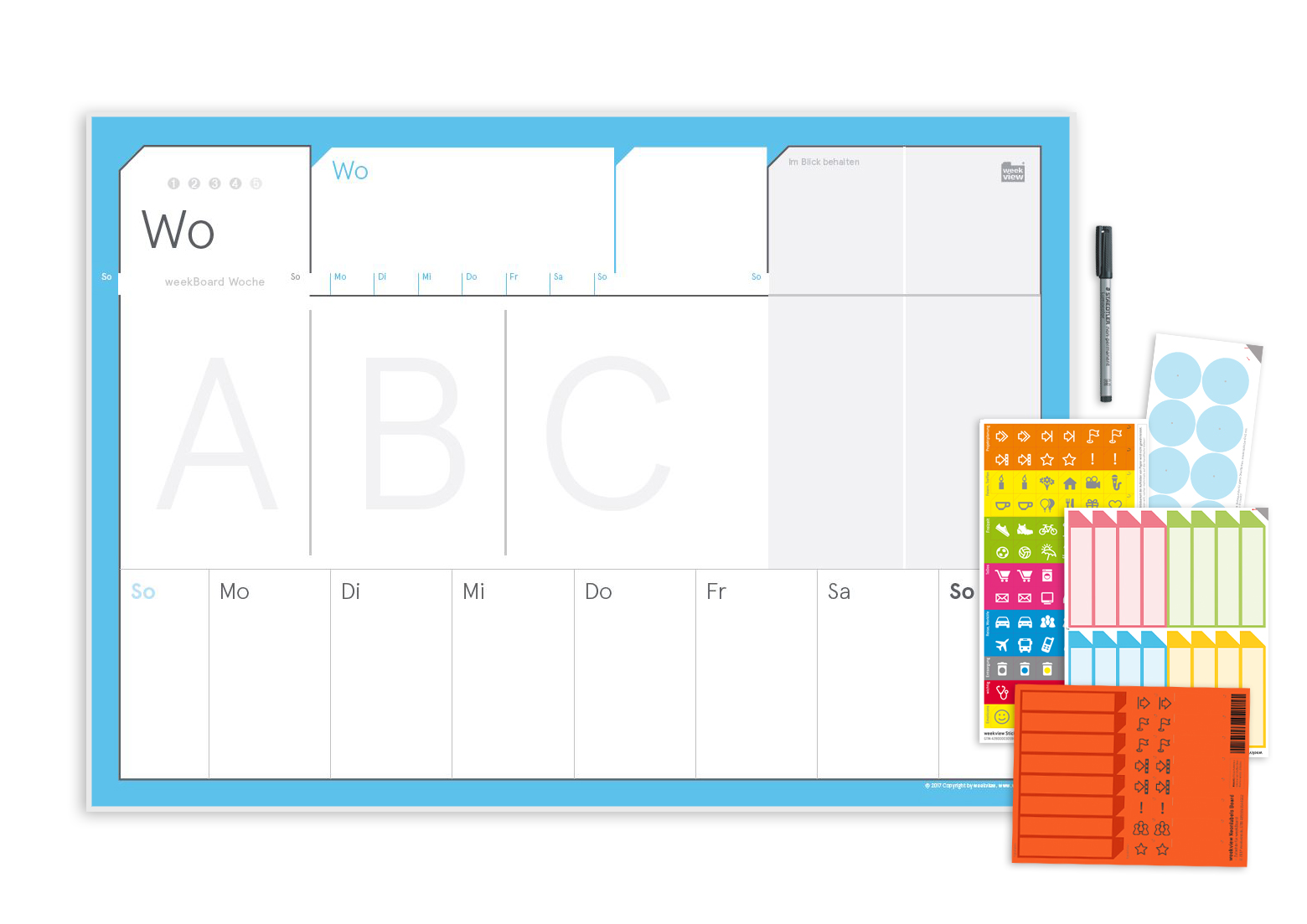
The weekBoard is the smallest unit in the system. It doesn't divide up time, it divides up importance: whatever counts this week goes into the priority field – whatever has a fixed day goes into the daily section.
- Priority field plus space for topics and tasks
- Daily section running Sunday to Sunday
- A2h portrait for narrow walls, A2 landscape for wide ones
- Unpunched with Pinits or pre-punched for the hanging rail
Quarterly goals you can't overlook.
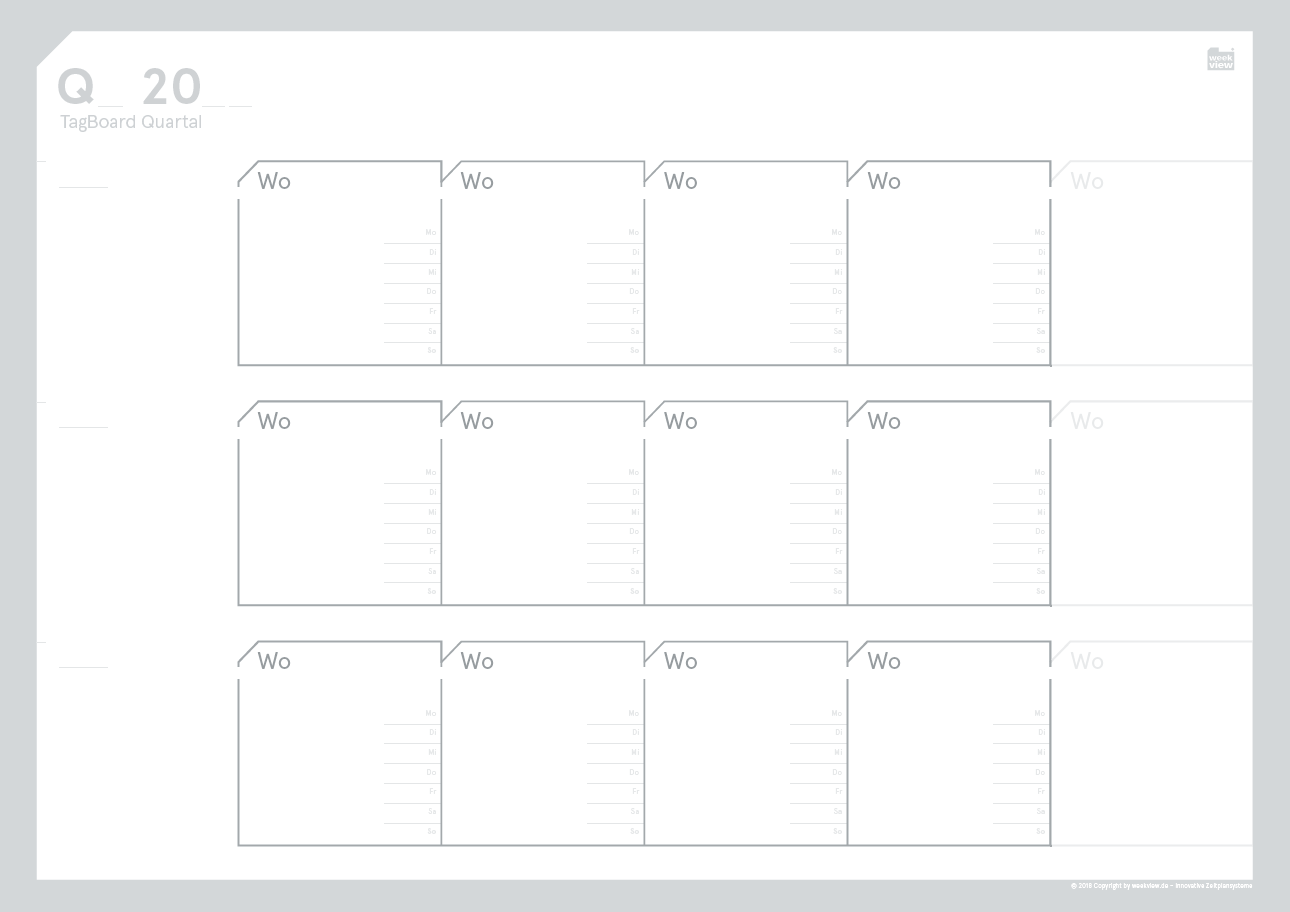
A goal buried in a file never gets opened again by month two. The QuartalsBoard keeps it where everyone walks past – at home, in the office or in the team.
- A2h portrait: goal field at the top, grid area in three monthly columns
- A2 landscape: the quarter in weekly fields – you can see exactly how much time is left
- Undated – the same sheet for Q1 to Q4, year after year
- Both available wipe-clean, both 14.95 €
Two grids. One large surface.
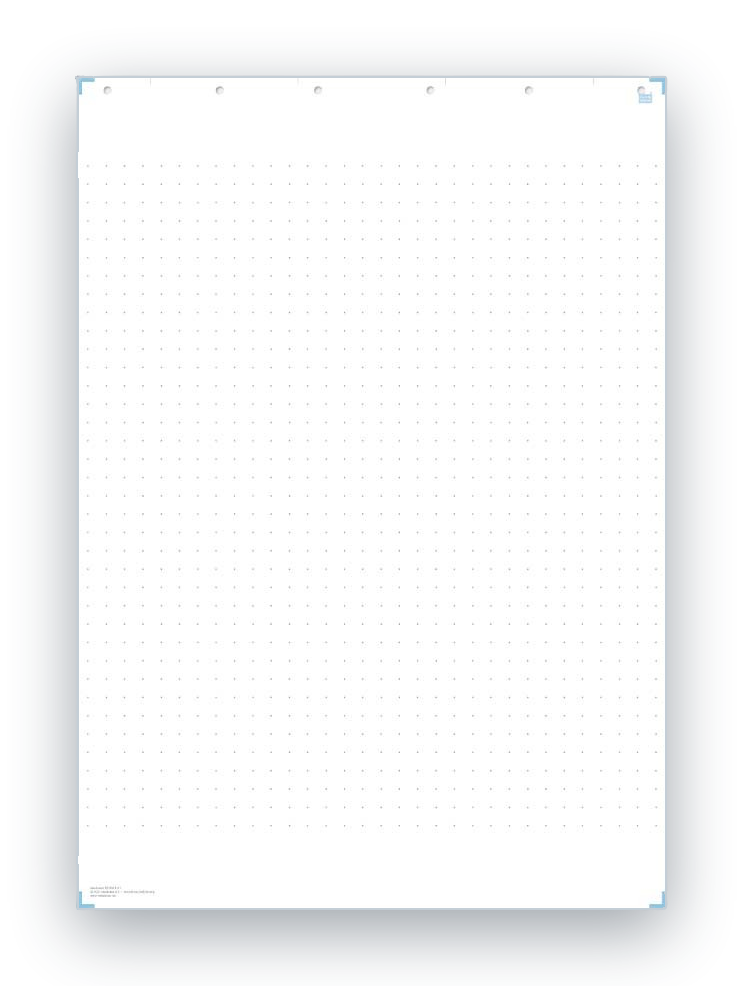
On the Kanban and Dotted Board there is no date and no week. One gives you a column grid, the other nothing but dots – both in DIN A1 portrait, the largest format in the range.
- Kanban: 5 columns × 8 rows, write your own column headings
- Dotted: dot grid – with blue corner markers for scanning with your phone
- Both pre-punched for the hanging rail, identical dimensions
- As a 5-sheet paper set from 9.95 € or wipe-clean
A calendar plans. A Chronicle remembers.
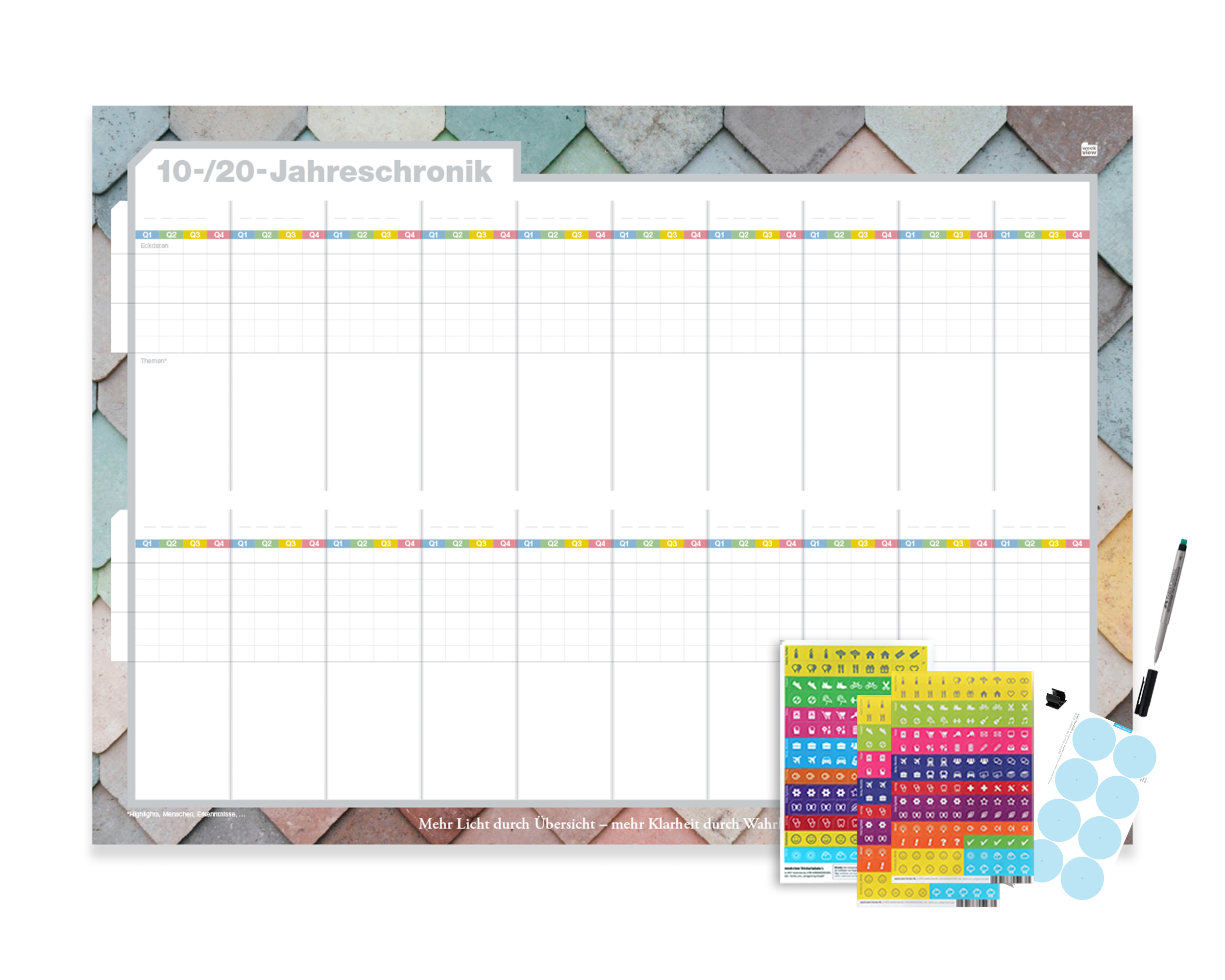
The Chronicles don't plan ahead, they hold on to what has been. Key dates, themes, turning points – so that in December you remember more than just the last month.
- Year Chronicle: one year in quarters, months and weeks 01–52
- 10-/20-Year Chronicle: two timelines of ten years each, quarter by quarter
- In A1 and A2, wipe-clean or as a paper sheet
- Plus sets with stickers, marker and Pinits
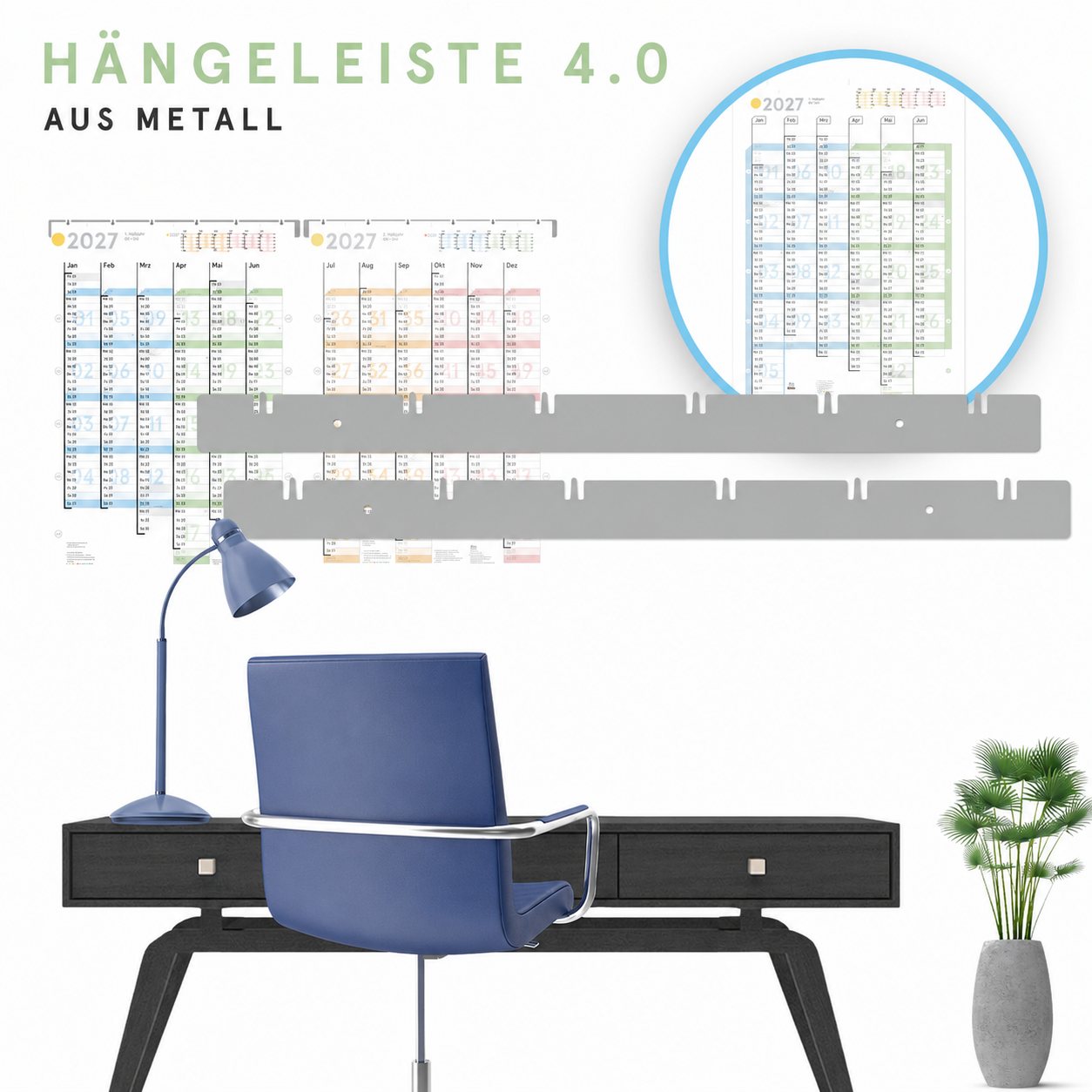
Hanging Rail 4.0 –
hang it up instead of sticking it on.
Forget clamp rails, tape or sticky strips: one rail in grey painted metal. The punched sheet hooks straight in and lifts back out when you swap it – crease-free, no residue, and no damage to the wall behind it.
- Metal, metal rail, grey painted finish
- Can be used magnetically
- Dimensions 450 × 30 × 1 mm, 100 g each
- Fits DIN A5 through to DIN A1
- Gecko adhesive tape, removable without residue
- Can be screwed on if you prefer, drill holes included
This is what counts on this wall
The hanging rail carries both
A pair of metal rails, 45 cm long, in greyish grey painted metal. It holds formats from DIN A5 to A1 – boards and half-year planners alike.
Sticks without residue
Each rail comes with two Gecko adhesive strips; the fixing peels off without leaving a trace. Would you rather drill? The holes are already there.
Pre-punched means a perfect fit
Kanban Board, Dotted Board and the Plus pre-punched versions of the half-year planners are supplied punched to match – they hang straight up with no extra work.
Wipe-clean where it counts
The laminated versions are written on with a non-permanent marker pen and wiped clean again. The paper versions cost less and are made for entries that stay put.
Mark it up instead of writing it out
Write-on labels, neon labels and reusable Sticker XL turn a blank surface into a plan you can read – even from three metres away.
Headers for other boards, too
The Planning headers also work on whiteboards that aren't weekview: quarters, months and weekdays as a time set, plus a mix set running from backlog to done.
Is there a date on it?
That is the whole question. Everything else follows from it: What do you plan with – a surface or a time frame?
If you re-sort things every week, if you keep moving tasks around, if you stand in front of the wall with your team and talk it through, you need a Board. It has no date, just a structure: priorities A, B and C, a daily section, a quarterly grid, a Kanban field.
If you want to know what actually happened over the past few years, you don't need planning – you need a Chronicle – one year in quarters, months and weeks, or a whole decade at once.
The two don't rule each other out. Most people hang the current week on the wall and the quarter right beside it – on the same rail.
Three walls, three answers
Same question – are you planning the week, the quarter or the next eighteen months?
“What's on this week?”
Priorities A, B and C, with the daily section from Sunday to Sunday below – and on the right an outlook on the next three weeks. Wiped clean on Friday, brand new on Monday.
weekBoard A2 and A2h“Will that still fit in the quarter?”
Three months in portrait, wipe-clean: to-dos, appointments, projects and deadlines on a single surface. For everyone who thinks in milestones rather than weeks.
QuartalsBoard A2 and A2h“And what if it runs into next year?”
Three half-year sheets side by side. Once the first one is done, it comes down and the fourth joins the row – so you always keep a full eighteen months in view.
18-month wall planner, 3× A2hFrequently asked questions about boards and the hanging rail
Board or wall planner – what's the difference?
What will the hanging rail hold?
Do I have to drill holes for the hanging rail?
What does “pre-punched” mean?
What do I write on a board with?
Why eighteen months and not twelve?
How big is a half-year planner?
What is different about the PREMIUM sets?
One wall. Two ways.
The week, the quarter, the flow of tasks – and the Chronicle for everything that has already been. Four time frames, one wall, the same hanging rail.