
Calendar weeks You finally understand.
"Wk38" is unambiguous — but hardly anyone knows straight away when it falls. The Global Week Code combines the clear ISO week number with the familiar month. That makes every week unambiguous, memorable and instantly placeable.
unambiguous, but without a month reference
A week number creates clarity — but not yet orientation.
Calendar weeks are indispensable in companies, trades, production and project planning. But an isolated number doesn't reveal which month the week falls in or how it fits into a quarter.
The week is technically unambiguous. Even so, You have to look it up in the calendar to place it in time.
- instantly recognizable as a week within the month
- directly placeable within the month and the quarter
- easy to communicate and remember
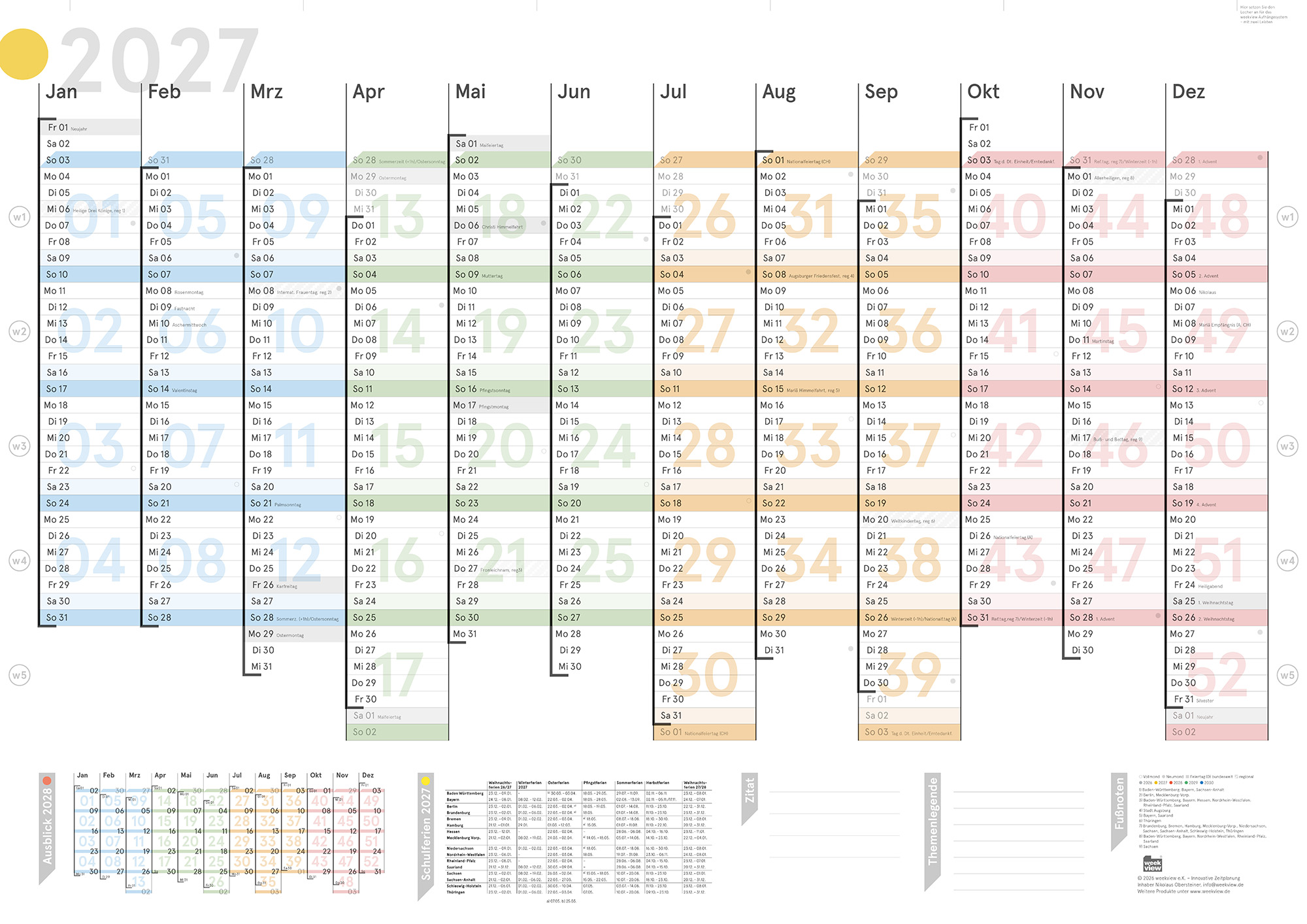
The current week in the overall context.
In addition to the Global Week Code, weekview can also show an extended visualization. That way You see at a glance where the current week sits in the quarter, in the monthly rhythm and in the year overview.
This is how the Global Week Code is formed.
The GWC doesn't replace the calendar week. It adds a month-related label to it — following the same majority logic that also underlies ISO week numbering.
Example: the week at the turn of the month
1 July 2027 is a Thursday. Four days of the week already fall in July — which is why the whole week is assigned to July.
The code at a glance
Every element has exactly one job. That keeps the notation short, machine-readable and understandable for people at the same time.
The GWC makes quarters plannable.
In week logic, a quarter usually consists of two months with four weeks and one month with five weeks. The plus makes this additional week of room instantly visible.
- Project phases can be defined week by week.
- Milestones stay understandable in their monthly context.
- Holiday, school-holiday and production periods become clearer.
- Planning follows a stable 13-week rhythm.
A shared language of time for life and work.
When everyone involved means the same week and can place it straight away, the coordination effort drops — privately, in the team and along entire supply chains.
Less mental load
No vague statements like "mid next month". A concrete week reduces mental conversion.
Family organization
Childcare, holidays, visits and weekends can be coordinated unambiguously.
Achievable weekly goals
Week-based tasks feel more manageable than rigid daily deadlines and strengthen the sense of progress.
Stable habits
Routines such as "three times a week" fit naturally into the recurring weekly rhythm.
Team and project work
Budgets, sprints, delivery dates and milestones get a clear reference in time.
Work and rest
The week combines recurring phases of work with a clear rhythm for recovery and reflection.
From the appointment to an understandable weekly structure.
Instead of administering individual days in isolation, connected phases can be communicated as weekly packages.
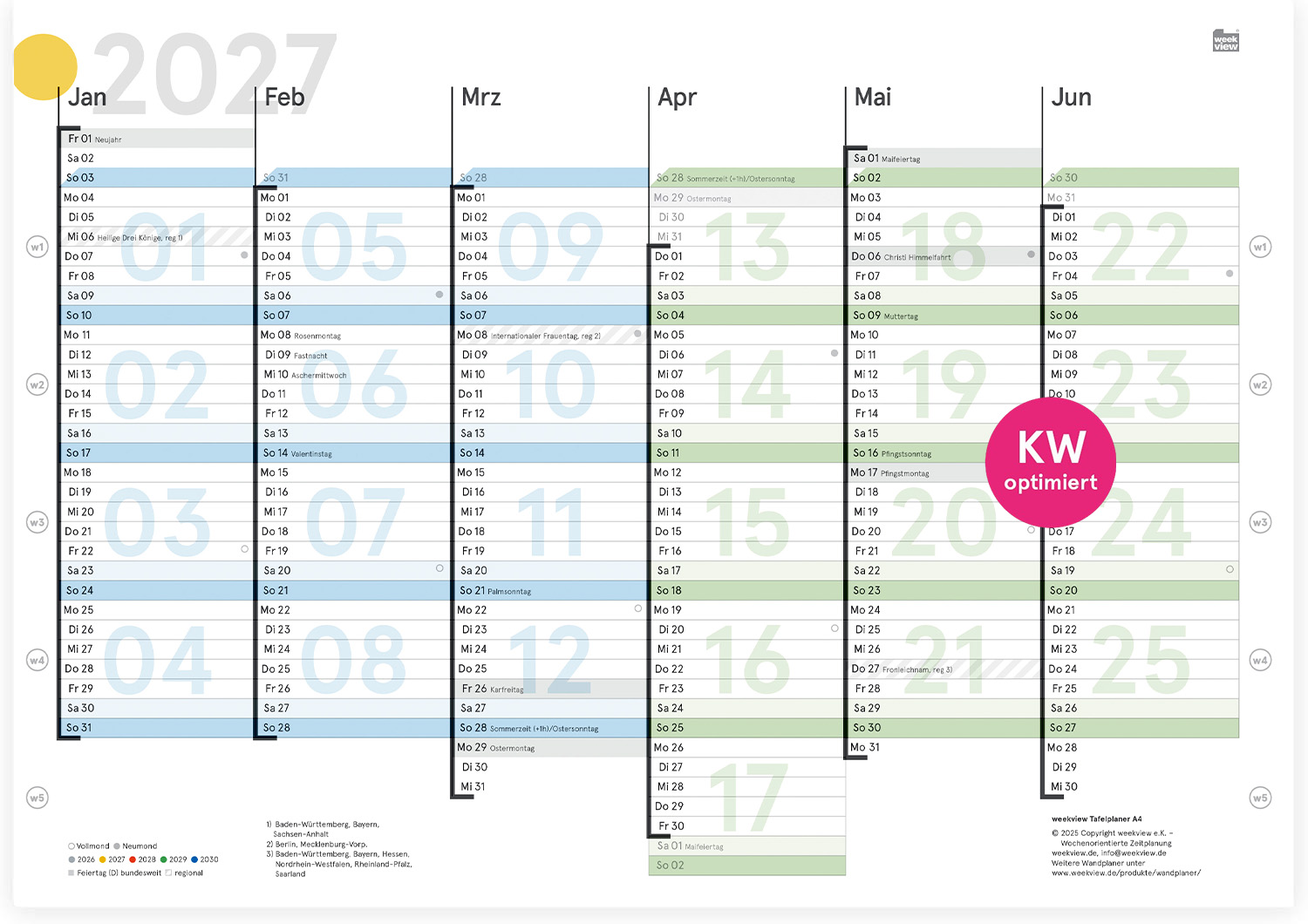
Important: All weekview products work on this principle — from the wall planner and the year planner through to the various planner formats.
The same week logic — from the year overview to the weekly planner.
One principle, many formats: once You have understood the weekview week logic, You find Your way around all our products quickly.
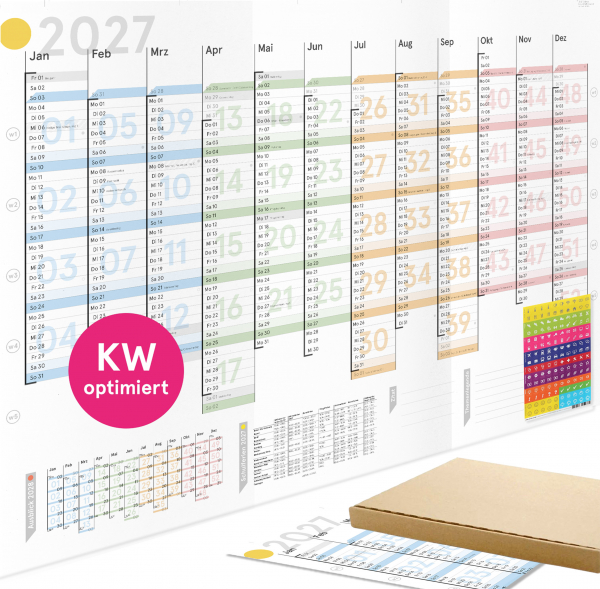
Wall planner Colour 2027
The whole year in a weekly grid — with clear orientation by quarter and month.
View the wall planner →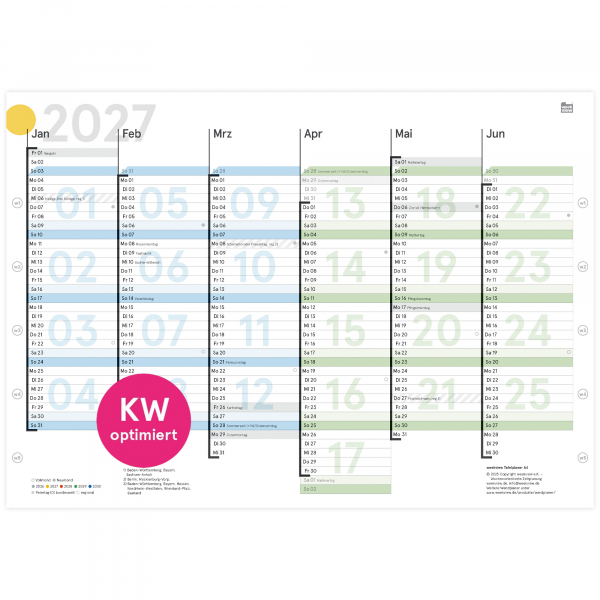
Year planner 2027
The weeks of a year arranged clearly on one compact year surface.
View the year planner →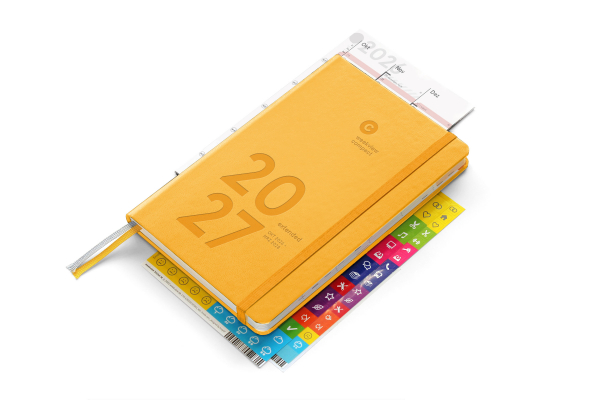
compact extended 2027
Weekly, quarterly and project planning in one compact 18-month planner.
View the weekly planner →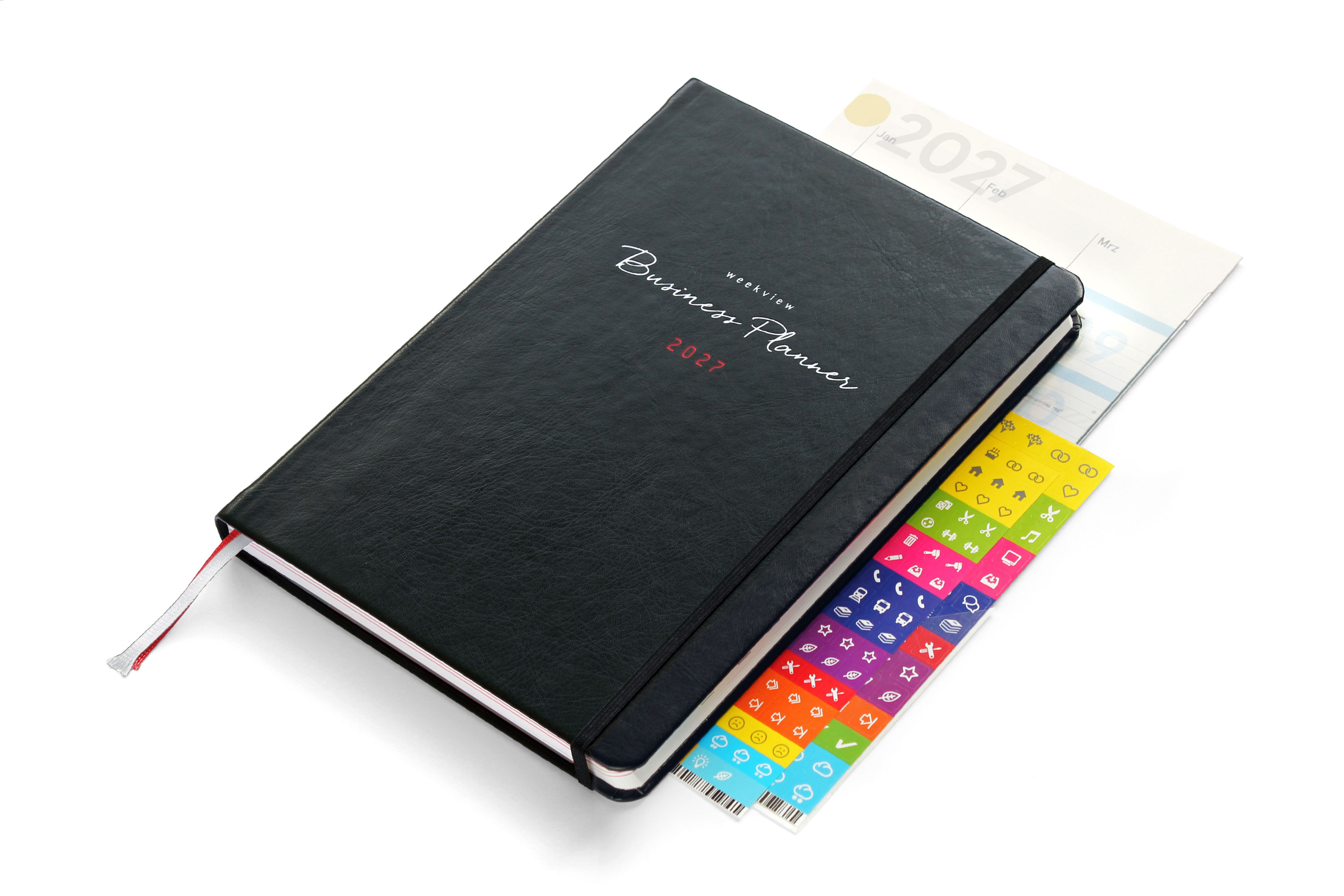
Business Planner 2027
Weekly and quarterly planning for entrepreneurs and high performers — the weekview flagship.
View the Business Planner →At weekview every year has its own colour.
In addition to the code, a recurring colour logic supports the quick visual assignment of different years.
The GWC briefly explained.
Does the Global Week Code replace the calendar week?
No. The classic week number to ISO 8601 stays as it is. The GWC adds an understandable assignment to a month.
Which month does a week at the turn of the month belong to?
The week belongs to the month in which at least four of its seven days fall. That way every week is assigned to one month completely and is not split.
What does the plus sign mean?
The plus marks a month that has five complete weeks assigned to it — all weeks of that month carry the plus, for example "2027-07-w5+". Months with four weeks are written without a plus.
Why does the week start on Monday?
The GWC follows the ISO 8601 logic that is standard in Europe: Monday is the first and Sunday the last day of the week.
Does the GWC work internationally too?
The code is designed for calendars that follow ISO 8601 week logic. In countries with a different definition of the start of the week or of the first week of the year, the assignment can differ.
The week is the unit. The GWC is its language.
Discover weekview planners and year overviews that structure time consistently into understandable, connected weeks.